What Is an SEO Agency in Singapore Actually Doing in 2026?
SEO agencies in Singapore have changed completely in 2026. Here is what a modern agency actually does for your business - and why most still get it wrong.
Nick Tung
@nick_tung_ · 18 min read
Published:
Updated:
Update, 25 September 2026: PSG, EDG and MRA take new applications until 29 September 2026. From 30 September 2026, new projects apply under Enterprise Singapore's EDGE grant. Applications submitted before 30 September are still assessed under the old scheme's rules, so where this article describes PSG, EDG or MRA, read it as how those schemes worked. Per Enterprise Singapore's release of 9 September 2026, EDGE supports SMEs at up to 50% on most activities and up to 70% on internationalisation and sustainability, within a S$100,000 grant cap per company per year. Eligibility is decided by Enterprise Singapore.
What an SEO Agency in Singapore Does in 2026 (vs 2019)
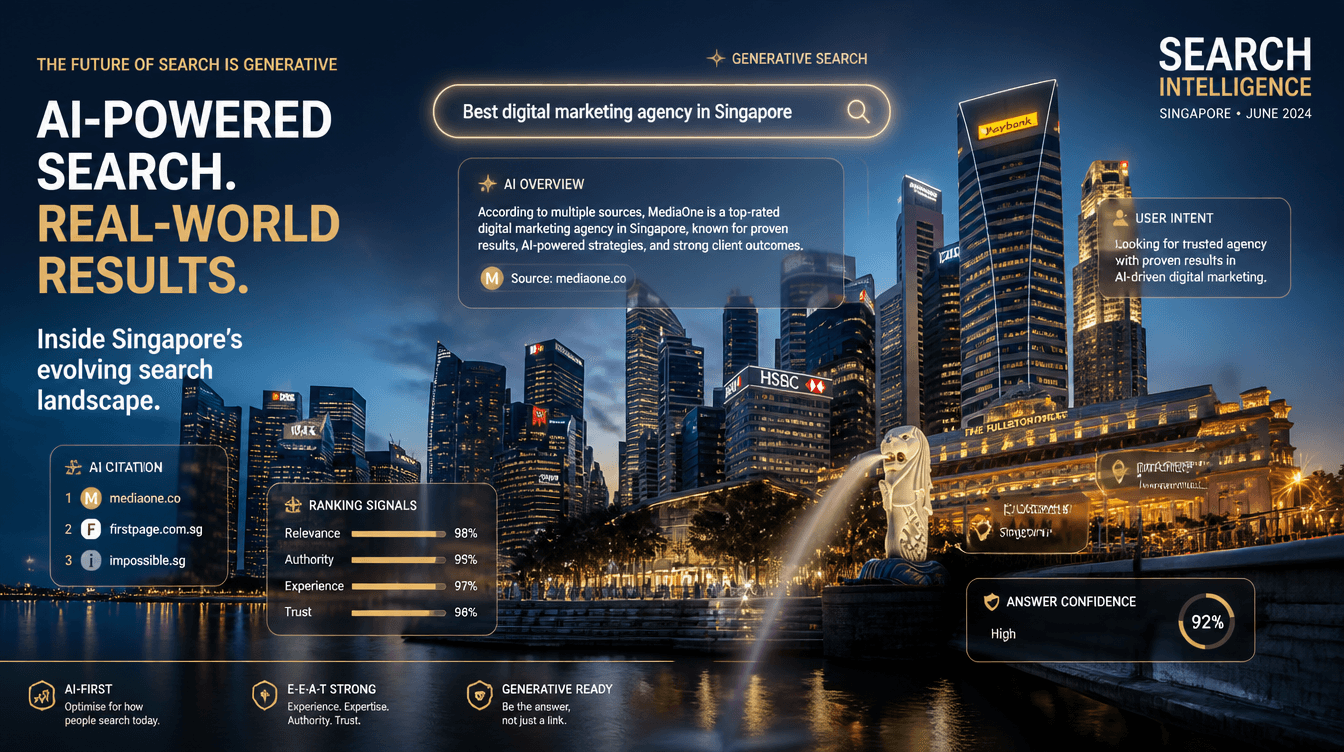
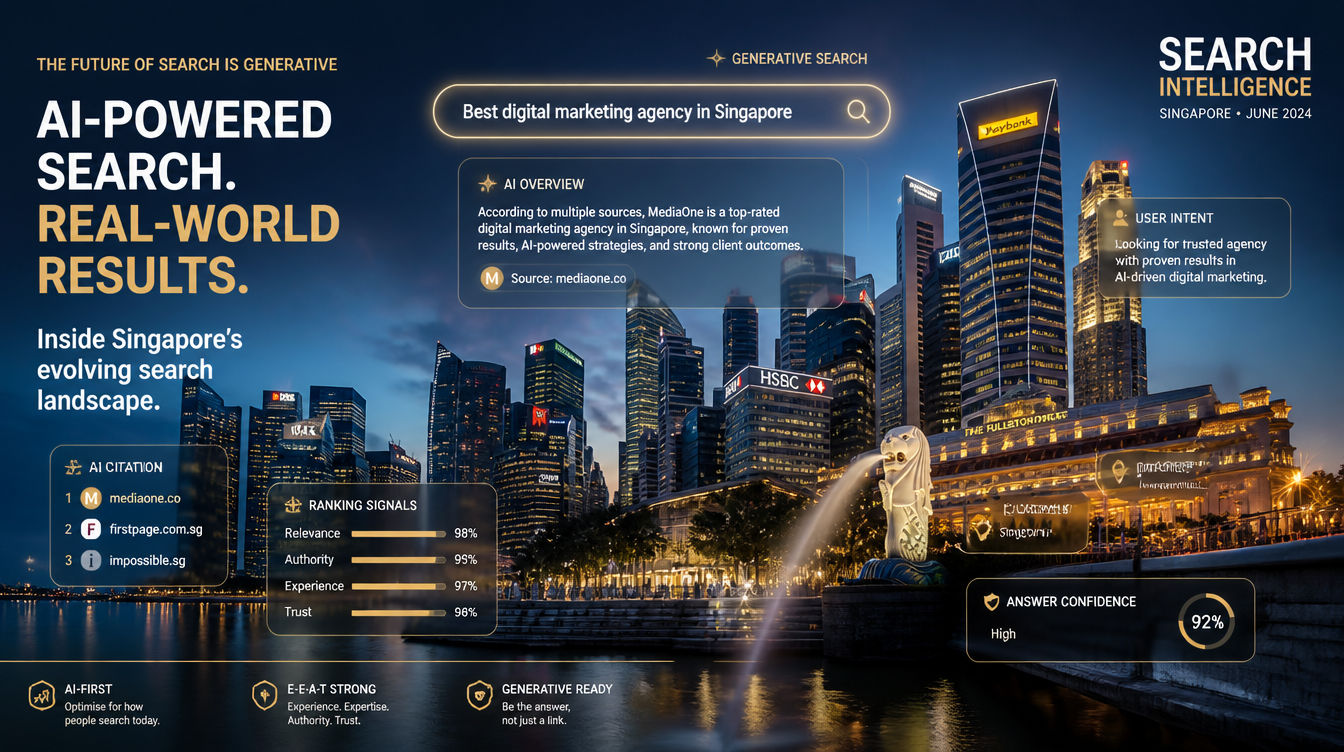
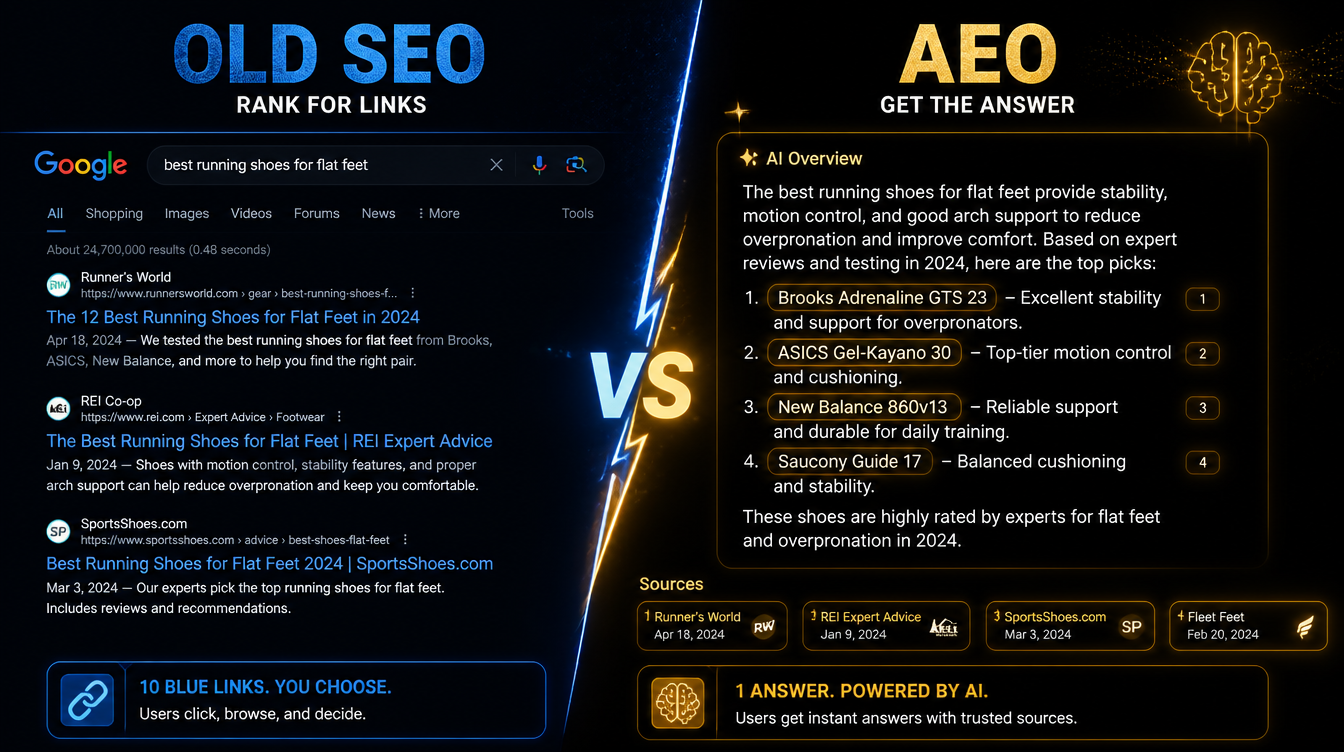
A modern SEO agency in Singapore is running a fundamentally different playbook than it was five years ago, the work has split into two parallel tracks: getting found on Google's blue links, and getting cited by AI systems like ChatGPT, Perplexity, and Google's AI Overviews. If your agency is only focused on the first track, you are paying for half a service.
In 2019, a competent SEO agency in Singapore would audit your technical setup, write keyword-optimised blog posts, and build a handful of backlinks every month. That was largely sufficient. Google was the dominant discovery channel, its algorithm rewarded keyword density and link volume, and the playbook was stable enough that most agencies could package it as a retainer and deliver predictable results.
By 2026, that model is broken for several reasons that compound on each other.
First, Google's algorithm is measurably more sophisticated. The March 2024 core update, one of the most impactful Google has ever documented in Search Central, dramatically reduced low-quality, AI-generated content in SERPs. Many Singapore sites that had been riding content farms saw 30-60% traffic drops overnight. The sites that survived or grew had genuine E-E-A-T signals: real authors, real expertise, demonstrable experience with the topic they wrote about.
Second, AI search has changed user behaviour faster than most agencies have adapted. When someone types "best accountant for SME in Singapore" into ChatGPT or Perplexity, they get a direct answer, often with citations. The organic search result you worked three years to achieve may not even be consulted. The battle has moved upstream to which sources AI systems trust enough to cite, and that is a different optimisation game from ranking on page one.
Third, Singapore's digital sophistication has accelerated. IMDA's Smart Nation initiative has pushed digital literacy across SME sectors. Customers now expect faster-loading, mobile-first experiences, and they comparison-shop across Google, social platforms, and AI chat tools simultaneously. The agency that cannot serve across all those surfaces is managing a shrinking slice of your discovery opportunity.
What a modern SEO agency in Singapore should actually be doing in 2026:
- Technical SEO: Core Web Vitals compliance, mobile-first indexing, structured data implementation via Schema.org, canonical hygiene, crawl budget management, and XML sitemap maintenance
- Content strategy: Topic cluster architecture, search intent mapping, E-E-A-T-first writing briefs, and content velocity calibrated to your domain authority
- Authority building: Digital PR, local citation consistency (especially for local search in Singapore), and quality-over-quantity backlink acquisition
- AI optimisation: Answer-first content structure, citation-friendly formatting, FAQ schema, and llms.txt configuration so AI crawlers can index your site correctly
The gap between agencies that understand this and those that are still selling "10 blog posts and 5 backlinks a month" is enormous. Before you engage any agency, ask them directly: "What is your AI Search Readiness strategy?" If they cannot answer that question fluently, you are looking at a 2019 agency operating in 2026 conditions.
The Three Layers Every Modern SEO Agency Must Operate On
A competent SEO agency in Singapore in 2026 operates across three layers simultaneously: technical, content, and authority. Weakness in any one layer limits what the other two can achieve.
Layer 1: Technical SEO
Technical SEO is the foundation. Without it, your content cannot be properly crawled, indexed, or understood. The technical work a good agency should be auditing and maintaining includes:
Core Web Vitals. Google's Page Experience signals (Largest Contentful Paint (LCP), Interaction to Next Paint (INP, which replaced FID in March 2024), and Cumulative Layout Shift (CLS)) directly influence rankings for competitive queries. Most Singapore SME sites still fail INP benchmarks because they are running bloated JavaScript frameworks or unoptimised third-party scripts from marketing tools. A credible agency will have actual CrUX (Chrome User Experience Report) data from Google Search Console, not just Lighthouse scores from a desktop simulation.
Mobile-first indexing. Google has been using mobile-first indexing as the default since 2021, but many Singapore agency-built sites are still designed desktop-first and tested on desktop. If your mobile experience has content that differs from your desktop content (especially structured data, text, or images) you are being indexed on the weaker version.
Structured data (Schema.org). This is one of the most underutilised levers in Singapore SEO. Local Business schema, Article schema, FAQPage schema, Product schema, and Review schema all directly feed both Google's rich results and AI systems' understanding of your business. I have audited hundreds of Singapore SME sites through the Nick SEO Engine and the absence of structured data is nearly universal, even on sites that rank reasonably well, the lack of schema is leaving rich snippet real estate and AI citation opportunities on the table.
Canonical tags and duplicate content. E-commerce sites, multi-language sites, and sites with filtering parameters are particularly vulnerable. If your Shopify or WooCommerce store generates dozens of near-duplicate URLs for the same product, you are diluting your authority across multiple low-value pages. Canonical tags tell Google which version to consolidate. This is basic hygiene but regularly neglected.
Sitemap and crawl budget management. For sites over 200 pages, crawl budget matters. Your sitemap should reflect your current site architecture, not the one from three years ago. Orphaned pages, 404s, and redirect chains all consume crawl budget that should be directed toward your highest-value content.
Layer 2: Content SEO
Content is where most agencies under-deliver relative to what they charge. The shift that matters in 2026 is from keyword-stuffed articles to genuine expertise content structured for AI comprehension.
E-E-A-T. Google's Quality Rater Guidelines added the first "E" (Experience) to the traditional E-A-T framework in late 2022. The practical implication: content that demonstrates first-hand experience with a topic is valued more highly than generic explainers. For a Singapore manufacturing SME, that means case studies with actual project outcomes, specifications, and client results, not recycled industry statistics that anyone could publish.
For professional services firms operating under Singapore's regulatory environment (finance, legal, medical, accounting), YMYL (Your Money or Your Life) requirements are even more stringent. Google applies heavier scrutiny to this content, and AI systems are more selective about which sources they cite. The bar for trustworthiness is high, and it should be.
Topic clusters. The era of publishing individual keyword-targeted posts and hoping each one ranks independently is over for competitive niches. Modern content strategy requires a pillar-cluster architecture: one comprehensive pillar page on a core topic (3,000+ words, answering the full topic space) supported by a network of cluster pages that each address specific sub-questions and link back to the pillar. This architecture signals topical authority to Google and provides AI systems with a structured knowledge graph to cite from.
Search intent mapping. Not all keywords with the same volume deserve the same content type. "SEO agency Singapore" (this article's primary keyword) has mixed navigational and commercial intent, users are either trying to find a specific agency or evaluating the category. "How long does SEO take in Singapore" has informational intent and requires an explanatory answer, not a service pitch. "SEO agency price Singapore" has commercial investigation intent and requires transparent pricing or a comparison framework. A good agency maps intent before assigning content type.
Content velocity and domain authority. Publishing 50 posts in month one and then going silent destroys any momentum you build. Domain authority, both in Google's understanding and in AI training data, accrues to sites that publish consistently over time. I recommend calibrating content velocity to what you can maintain for 12 months, not to what looks impressive in a pitch deck.
Layer 3: Authority SEO
Authority is the hardest layer to fake, which is why so many agencies either ignore it or offer hollow substitutes.
Backlink quality over quantity. A single genuine editorial link from a Singapore Business Review article, a CNA Business feature, or an industry association (SiTF, SCCCI, AiSP) is worth more than 100 purchased directory links. Google's spam algorithms have become exceptional at identifying link patterns that do not reflect genuine editorial endorsement. The sites I have seen penalised in the last 18 months almost all had the same signature: high link velocity, low link diversity, heavy anchor text optimisation.
Digital PR. The mechanism that builds authority at scale is earned media, getting your spokespeople quoted in relevant publications, participating in industry research, publishing original data that journalists and bloggers cite. For Singapore businesses, this means building relationships with The Business Times, CNA, Tech in Asia, e27, and the relevant trade publications for your sector. Most SEO agencies do not have this capability; those that do charge for it separately and correctly.
Local citation consistency. For businesses targeting local Singapore search (the "near me" queries, the Google Maps results, the local pack) NAP consistency (Name, Address, Phone) across directories matters significantly. Singapore-specific directories that carry authority include HardwareZone Business Listings, SGBIZLIST, Singapore Pages, and the EnterpriseSG company directory. Inconsistencies in your business name or address formatting across these sources create trust signals that confuse both Google and AI systems trying to verify your business existence.
Why AI Search Has Changed the Game: And What Most Singapore Agencies Are Missing
AI search has fundamentally altered the conversion funnel, and the majority of Singapore SEO agencies have not yet built the capability to address it. The shift is real, it is accelerating, and the businesses that adapt now will have a compounding advantage over those that wait.
The mechanism works like this: when a user asks ChatGPT, Perplexity, or Claude a question about business services in Singapore, the AI system cites sources it deems authoritative. These citations drive high-intent traffic, users who have already received a recommendation and are now verifying or converting, not browsers at the top of the funnel. Conversion rates from AI-cited traffic consistently exceed organic search traffic because the work of discovery has already been done.
A landmark study published at KDD 2024 by Aggarwal et al. (Princeton University) quantified exactly what content attributes drive AI citation likelihood. The findings are directly actionable:
- Citing credible sources in your content increases AI visibility by approximately 40%. When your article cites peer-reviewed research, government data (IMDA reports, MOM statistics, Singapore Statistics), or recognised industry bodies, AI systems are significantly more likely to treat your content as trustworthy enough to pass on.
- Including statistics increases AI citation likelihood by approximately 35%. Specific, verifiable numbers make content more citable. "Singapore SMEs that invest in digital marketing see improved customer acquisition" is not citable. "According to the 2024 IMDA SME Digital Index, 67% of Singapore SMEs that adopted a structured digital marketing approach reported year-on-year revenue growth above 10%" is citable.
- Including quotations from named experts increases citation likelihood by approximately 20%. For Singapore businesses, this means getting executives or industry voices quoted in your content, not just writing as an anonymous corporate voice.
The practical implication: content written for AI citation looks meaningfully different from content written for traditional keyword ranking. It is denser with attribution, more structured in its argument, and more willing to engage with complexity and nuance rather than simplifying for readability scores.
What most Singapore SEO agencies are missing specifically:
They are not configuring llms.txt. This emerging standard (analogous to robots.txt but for AI crawlers) allows you to specify how AI systems should understand and index your site. Most Singapore sites do not have one. My Nick SEO Engine checks for this as part of its AI Search Readiness Score and consistently finds it absent.
They are not structuring content for answer extraction. AI systems prefer content that has a clear question-answer structure, uses headers to organise information, and states answers directly before explaining them. The traditional SEO approach of burying the key point in paragraph four to maximise time-on-page is actively counterproductive for AI citation.
They are not monitoring AI brand visibility. Most agencies track keyword rankings in Google Search Console. Very few are monitoring whether their clients appear in AI responses to relevant queries. You can check your own AI brand visibility at /tools/ai-brand-visibility-checker, if you are not appearing when users ask AI tools about your service category in Singapore, you have an AI optimisation gap.
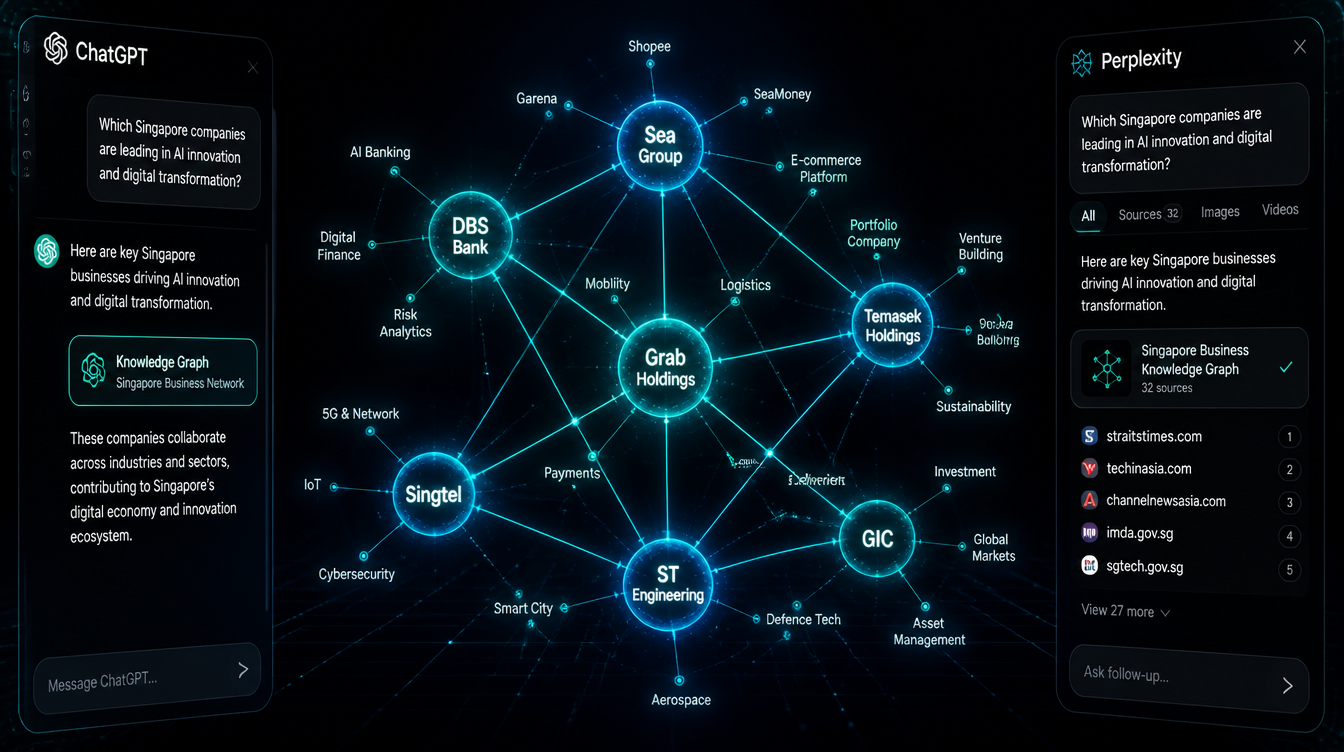
They are not building the entity graph. AI systems understand businesses as entities in a knowledge graph, not just as websites. Consistent mentions of your business name, your executives, your location, and your products across trusted sources (Wikipedia (if eligible), Wikidata, Google Knowledge Panels, LinkedIn, and cited press coverage) build the entity signals that make AI systems confident enough to cite you.
For Singapore businesses operating in regulated sectors (finance, healthcare, professional services), AI citation carries additional weight because users in these sectors trust AI-curated recommendations more than they trust paid advertising. Building AI visibility in these categories is a long-term moat.
What to Expect in Your First Three Months With an SEO Agency
The first three months with a Singapore SEO agency should be a structured discovery-and-foundation phase, not a content production sprint. If your agency is already publishing 10 blog posts in month one without a completed technical audit, run.
Month 1: Audit, Strategy, and Technical Fixes
A credible agency will spend month one doing three things: a comprehensive technical SEO audit of your current site, competitive analysis of the top 5 to 10 sites ranking for your priority keywords, and keyword and intent mapping for your target audience.
The technical audit should produce a prioritised remediation list. Not every issue has equal weight, a missing meta description on a product page matters less than a broken canonical tag on your homepage. The agency should be able to articulate which fixes will have the highest impact on crawlability and indexing before any content is written.
Realistic expectation: you will not see ranking improvements in month one. You may see Search Console coverage improving (more pages indexed, fewer crawl errors) if the technical fixes are implemented promptly. If you are told to expect visible ranking improvements in month one, you are being misled.
Month 2: Content Architecture and Initial Publishing
Month two should be about building the content architecture: identifying your pillar topics, mapping the cluster structure, and publishing the first content assets with proper on-page optimisation. This includes internal linking structure, schema markup on new content, and alignment with search intent.
For a Singapore SME with a new domain or low existing authority, realistic expectation is that new content begins to get indexed during this period. You might see impressions in Search Console start to grow. Clicks and actual ranking positions will lag by 4 to 8 weeks after indexing, depending on query competition.
For established domains with existing authority, new content can rank meaningfully within 6 to 10 weeks. But "meaningful" means page 2 to 3 initially, moving toward page 1 over months 3 to 6 as the content builds engagement signals.
Month 3: Authority Building and Performance Review
Month three is when link building and digital PR activities should be generating their first results. One to two quality backlinks per month is a realistic and healthy pace for most Singapore SMEs. More than that and you are likely looking at low-quality links that will create liability rather than lift.
The month-three performance review should compare Search Console data from before the engagement to current: impressions growth, click growth, average position improvement for target keywords, and Core Web Vitals status. The agency should present this data without cherry-picking, showing you only the metrics that improved is a red flag.
If you are not seeing measurable impression growth within 90 days, either the technical foundation is still broken, the content is not being indexed correctly, or the keyword targets were not realistic for your domain's current authority. These are solvable problems, but they require honest diagnosis, not happy reports.
The honest timeline nobody wants to say out loud: For a new domain or a domain with no previous SEO investment, meaningful organic traffic (enough to justify the agency fee through attributed revenue) typically takes 6 to 12 months. For an established domain with a solid content base, 3 to 6 months is achievable for incremental improvements. Anyone promising page 1 rankings in 30 days is either lying, targeting terms with zero search volume, or planning to use tactics that will damage your site when Google's next core update lands.
The Red Flags That Tell You an Agency Is Still Living in 2018
Most SEO agencies in Singapore are selling a 2018 playbook at 2026 prices. Here are the specific red flags to screen for before you sign a retainer.
They lead with keyword rankings as the primary KPI. Keyword rankings are a lagging indicator. They tell you where you ended up, not what is causing the result or how sustainable it is. A good agency leads with impressions growth, click-through rate improvement, Core Web Vitals scores, and, increasingly, AI citation presence. If the first slide in their proposal shows a table of "guaranteed top-3 rankings," exit the meeting.
They guarantee specific rankings. No ethical SEO practitioner guarantees rankings because rankings are determined by an algorithm outside anyone's control. Google explicitly states this in its Search Central documentation. Agencies that guarantee rankings are either targeting vanity keywords with near-zero competition, using black-hat tactics with a shelf life, or lying.
They price their service entirely on link volume. "10 links per month for S$1,500" is not a content strategy, it is a commodity service. The value of a backlink depends on the domain authority of the source, the editorial context of the link, the anchor text, and the relevance of the linking page to your topic area. An agency that sells links by the unit is not doing the quality analysis required to make those links valuable.
They produce generic content at high velocity. If your agency is publishing 20 blog posts per month at S$50 per post, you are getting AI-generated filler content that will not survive Google's quality filters and will not be cited by AI systems. One genuinely expert piece with proper E-E-A-T signals, original insight, and structured data is worth more than 20 generic articles.
They do not talk about AI Search Readiness. As I discussed above, AI citation is now a material component of organic discovery. An agency that cannot discuss FAQPage schema, answer-first content structure, and llms.txt configuration has not updated their knowledge base since 2022.
They do not show you your Google Search Console data directly. Some agencies maintain control of GSC access and provide summarised reports that they curate. Insist on having admin access to your own GSC property. The raw data will tell you things the curated report will not, including if your traffic is actually declining on queries the agency is not highlighting.
Their reports focus on outputs, not outcomes. "We published 8 articles and built 12 links this month" is an output report. "Your organic sessions grew 18%, your top three revenue pages improved from position 6.2 to 4.8 in average position, and your Contact page conversion rate from organic is up 11%" is an outcome report. If you are only ever receiving output reports, you are not being managed toward business results.
How Singapore's Digital Landscape Makes SEO Different Here
Singapore is not a generic market, and SEO strategy here has specific dimensions that agencies without Singapore experience consistently miss.
Search market dynamics. Google holds approximately 95% of the search market in Singapore, which makes it the clearest single target, but the competitive landscape within Google SERPs here is distinctive. You are competing with regional players (Malaysian and Indonesian companies targeting Singapore customers), global players with deep authority, and local businesses. The agency needs to understand which competitive tier each of your keywords sits in.
Bilingual SEO considerations. Singapore's four official languages (English, Mandarin, Malay, and Tamil) create genuine content opportunities that most agencies ignore. A significant portion of Singapore's population searches in Mandarin, and the competition for Mandarin-language keywords targeting Singapore users is far lower than for English equivalents. For businesses serving the Chinese-speaking community, Mandarin content strategy is a meaningful differentiator. Similarly, Bahasa Melayu content for Malay-language queries is under-served.
Singapore English (Singlish) also presents nuances. Colloquial terms that appear in natural language searches ("shiok food near me," "good deal lah") have measurable search volume and essentially zero competition. An agency with local linguistic intelligence can capture this long-tail traffic in ways that international agencies cannot.
Local Business Schema for Singapore. The correct implementation of Local Business schema for Singapore includes: addressCountry: "SG", correct addressLocality and addressRegion values (which are distinct from Western address schemas), Singapore telephone format (+65 prefix), and openingHoursSpecification in the Singapore time zone (UTC+8). I have seen dozens of Singapore sites with technically valid Local Business schema that still fails to trigger rich results because the address formatting does not match Google's expectations for the SG locale.
IMDA and EnterpriseSG grant relevance. Singapore businesses can access digital marketing support through several government schemes. The Productivity Solutions Grant (PSG) covers pre-approved digital marketing solutions. The Enterprise Development Grant (EDG) covers more customised market development activities. CTC (Customer Touchpoints) grants support customer acquisition marketing. A good Singapore SEO agency should be familiar enough with these grant schemes to help clients understand whether their SEO investment is eligible for co-funding. This matters materially to a business evaluating total cost.
The competition cluster problem. Singapore's geography means that almost every industry cluster is geographically concentrated. All the law firms in Raffles Place. All the F&B suppliers along Senoko. All the construction suppliers in Tuas. This means local SEO for B2B Singapore businesses is simultaneously very competitive (because your competitors are all in the same postal area) and very winnable (because most B2B firms have not invested seriously in local SEO).
MOM-regulated content. For HR technology, recruitment, and employment agency clients, Singapore's Ministry of Manpower regulations impose content constraints, claims about employment outcomes, salary benchmarks, and recruitment practices must be factually defensible and cannot make representations that violate the Employment Act or Fair Consideration Framework. A Singapore-experienced agency understands these constraints; an international agency may produce content that creates regulatory exposure.
What a Good SEO Agency Reporting Dashboard Actually Shows
A good SEO agency reporting dashboard is built around the metrics that connect SEO activity to business outcomes, not around the metrics that are easy to inflate. Here is what it should contain and what the presence or absence of each metric tells you.
Traffic quality metrics (not just volume):
- Organic sessions segmented by landing page (which pages are actually receiving traffic)
- New vs returning users from organic (high returning suggests branded search dominance; high new suggests non-branded acquisition is working)
- Organic conversion rate by landing page (not site-wide, page-level conversion rates expose which content is actually moving buyers)
- Bounce rate and engagement rate (GA4's engagement rate is more meaningful than UA's bounce rate; look for pages with <45% engagement rate as underperforming)
Search Console data:
- Total impressions and clicks (directional trend, not absolute numbers)
- Average position for primary keyword groups (branded vs non-branded, separately)
- Click-through rate by position band (a CTR below 2% for position 1 to 3 suggests a title/meta description problem or SERP feature suppression)
- Core Web Vitals status (poor, needs improvement, good) for mobile and desktop separately
- Coverage issues: indexed vs not indexed, and the specific reasons for non-indexed pages
Authority metrics:
- Referring domain count (new domains acquired this month vs lost)
- Domain rating or domain authority trend (from Ahrefs, Moz, or SEMrush, pick one tool and use it consistently)
- New vs lost backlinks (a pattern of losing links faster than acquiring them is a problem even if total count is growing)
AI visibility metrics (this is where most dashboards are blank):
- AI brand mention tracking: manual or tool-assisted checks of whether your brand or key content appears in ChatGPT, Perplexity, and Google AI Overview responses for your target queries
- AI Search Readiness Score from the Nick SEO Engine: a 0 to 100 score across structured data completeness, citation-ready content structure, answer-first formatting, and llms.txt configuration
- Featured snippet presence: position zero in traditional Google SERPs often correlates with AI citation likelihood
Business outcome metrics:
- Organic-attributed leads or sales (requires proper UTM tracking and CRM integration)
- Cost per organic lead vs paid lead (this is the ROI case for continuing the SEO investment)
- Revenue attributed to organic for e-commerce clients
The monthly reporting cadence should be a 30-minute call, not a 30-page PDF. The purpose of the report is not to demonstrate activity. It is to surface the two or three things that need to change in the next month based on what the data shows. An agency that spends your reporting call walking through a slide deck is using your time inefficiently. An agency that shows up with a clear hypothesis, the data that supports it, and the specific actions they recommend is operating at the right level.
The Rise of AEO and GEO: Why Rankings Alone Are No Longer the Goal
Answer Engine Optimisation (AEO) and Generative Engine Optimisation (GEO) are not buzzwords. They are the formal names for a structural shift in how online discovery works, and Singapore businesses that understand this shift early will have a meaningful advantage.
AEO: Optimising for answer engines
Answer engines (ChatGPT, Perplexity, Google AI Overviews, Microsoft Copilot) do not return a list of links and ask users to choose. They synthesise an answer and, where they do cite sources, they choose those sources based on criteria that are meaningfully different from traditional PageRank signals.
The core AEO principle is answer-first content architecture. Every piece of content should state its primary answer in the first two sentences, before any context, qualification, or background. This mirrors how AI systems prefer to extract and present information. It also, incidentally, aligns with how Google's featured snippet selection works, which means AEO and traditional SEO are not in conflict, they are converging.
For Singapore businesses, AEO implementation looks like this:
- FAQPage schema on every relevant page. FAQPage schema feeds both Google's People Also Ask feature and AI systems that parse structured data. Every service page should have an FAQ block with 4 to 8 Q&A pairs, marked up in JSON-LD.
- HowTo schema for process content. If you are documenting a process (applying for an EDG grant, setting up a Singapore company, selecting a laboratory calibration service) HowTo schema with clearly numbered steps significantly increases the likelihood of being cited by AI systems explaining the same process.
- Speakable schema for voice search. Less commonly implemented in Singapore but increasingly relevant as smart speaker penetration grows, Speakable schema marks up specific passages as suitable for voice reading, which correlates with AI answer extraction.
- Article schema with author markup. Linking your content to a verified author entity (via sameAs attributes pointing to LinkedIn profiles, Wikipedia pages, or Google Knowledge Panel entities) builds the E-E-A-T signals that AI systems use to assess source credibility.
To understand how AEO differs from traditional SEO in practice, read our comparison of AEO and SEO agencies in Singapore.
GEO: Optimising for generative engines
GEO is AEO's close relative, focused specifically on the generative AI systems that synthesise original responses rather than indexing existing content. The Princeton KDD 2024 study I mentioned earlier is the foundational research here. It is the most rigorous quantitative analysis available of what content attributes drive generative engine citation rates.
The key GEO strategies for Singapore businesses:
Statistics and data. AI systems are trained to prefer citeable, specific data points over general assertions. For a Singapore marketing agency, this means publishing your own research: client case study statistics (with permission), benchmark data from your own projects, and aggregated findings from your client base. This original data becomes a citation magnet because no one else has it.
Expert quotations with full attribution. A quotation in your content should include the speaker's full name, title, organisation, and the context of the quotation. "Dr Nick Tung, SPMC-certified AI consultant at Freemansland Holdings (SPMC-10960), noted that Singapore SME sites score an average of 24/100 on AI Search Readiness metrics" is citable. "According to an expert we spoke to, Singapore SMEs score poorly on AI readiness" is not.
Credible source citations. The circular logic of GEO: you improve your citation likelihood by citing authoritative sources in your own content. This signals to AI training systems that your content operates in a credible epistemic ecosystem and does not just assert claims without evidence.
Entity disambiguation. Make sure AI systems understand who you are. Your business should have consistent entity signals across: Google Business Profile, LinkedIn company page, Wikidata (if notable enough), Singapore company registry (ACRA), EnterpriseSG business listings, and relevant industry directories. The more consistent and cross-referenced your entity signals, the more confident AI systems become in citing you.
For a deep-dive into GEO-specific tactics for Singapore businesses, see how to get cited by AI in Singapore. For a holistic assessment of how both GEO and traditional SEO are evolving, explore our AI solutions consulting services.
The metric that ties AEO and GEO together is what I call the AI Search Readiness Score, a 0-100 composite that measures your site's preparedness for the AI-citation layer of discovery. When I run this score on Singapore business sites through the Nick SEO Engine, the median score is around 22/100. Most Singapore businesses have enormous room to improve, and the ones that do it now are building a compounding advantage that will be difficult for late movers to close.
SEO has always been a long-term game. But AEO and GEO add a new dimension: it is not just about how long you have been building authority on Google. It is about whether the AI systems that are increasingly mediating information access recognise you as a source worth citing. That is the 2026 frontier, and it is where the most consequential SEO work is now happening.
Common questions
What does an SEO agency in Singapore typically charge? Retainer pricing for Singapore SEO agencies ranges from S$800-S$2,500 per month for SME packages to S$4,000-S$12,000 per month for enterprise or highly competitive niches. The variance reflects scope, not quality, a S$2,000 retainer from a credible specialist agency will outperform a S$5,000 retainer from a large agency running templated campaigns. Ask specifically what proportion of the retainer goes toward content creation, technical work, and link building, if more than 40% is "account management," renegotiate.
How long does SEO actually take to show results in Singapore? For new domains or sites with minimal prior SEO investment, expect 6 to 12 months before organic traffic meaningfully contributes to revenue. For established domains with existing authority, incremental improvements in target keyword positions are visible within 3 to 6 months. Anyone promising page 1 results in 30 days is either targeting zero-competition keywords or using tactics that create risk. The timeline is non-negotiable because it is determined by Google's crawl frequency and algorithm, not the agency's effort level.
What is the difference between SEO and AEO? Traditional SEO (Search Engine Optimisation) focuses on ranking your website in Google's organic search results. AEO (Answer Engine Optimisation) focuses on getting your content cited and surfaced by AI systems like ChatGPT, Perplexity, and Google's AI Overviews. In 2026, you need both. They overlap significantly (structured data, E-E-A-T, answer-first content serve both) but have distinct technical requirements. Read our full comparison at /articles/aeo-agency-singapore-vs-seo-agency.
Can I use PSG or EDG grants to fund my SEO agency? Enterprise Singapore's PSG and EDG stopped taking new applications on 29 September 2026. New applications now go through the EDGE Grant. The Productivity Solutions Grant (PSG) covers pre-approved digital marketing solutions, check the IMDA pre-approved vendor list for currently eligible SEO/digital marketing tools. The Enterprise Development Grant (EDG) can cover customised digital marketing strategy and market development activities under the "Market Access" category. Eligibility criteria change annually; consult an EnterpriseSG-registered consultant or check the Business Grants Portal directly. Freemansland Holdings is an EDG-registered external consultant and can advise on grant structuring for digital marketing investments.
What should I look for in an SEO agency's case studies? Case studies should show actual before-and-after Search Console data (impressions, clicks, average position) for real client domains, not just traffic charts without scale, not keyword ranking screenshots from rank trackers, and not testimonials without measurable outcomes. Ask for the domain names of featured case studies so you can verify the data in Ahrefs, SEMrush, or SimilarWeb. An agency that cannot share verifiable case study data either does not have compelling results or has achieved results through tactics they cannot defend under scrutiny.
Is it worth doing SEO for a Singapore business if we also run Google Ads? Yes, and SEO and paid search are complementary, not competitive. Paid search delivers immediate visibility for high-intent queries but stops the moment you stop paying. SEO builds cumulative authority that compounds over time. For Singapore SMEs with limited budgets, a common approach is to run Google Ads on your highest-value transactional keywords while SEO builds organic authority for the broader query set, then progressively reduce Ads spend as organic rankings improve. The combination also provides more SERP real estate: appearing in both the paid and organic results for the same query increases click-through rates significantly.
How do I know if my current SEO agency is actually doing good work? Request direct access to your Google Search Console and Google Analytics (GA4) properties. These are your data, not the agency's. If they resist this request, that is your answer. With GSC access, check: impressions and clicks trend over the engagement period, which pages are receiving organic traffic, and whether the pages converting in GA4 are the ones the agency is optimising. Also check the Manual Actions and Security Issues sections in GSC for any algorithmic or manual penalties. Cross-reference the agency's link building reports against your actual referring domains in GSC's Links report.
What is an AI Search Readiness Score and how do I check mine? The AI Search Readiness Score (0-100) measures how well your site is positioned to be cited by AI systems like ChatGPT, Perplexity, and Google AI Overviews. Key components include: presence and completeness of structured data (Schema.org), answer-first content structure, llms.txt configuration, author entity signals, citation-quality content (statistics, expert quotes, credible references), and FAQ schema coverage. You can get a dual-score assessment, traditional SEO Score plus AI Search Readiness Score, through the Nick SEO Engine at /seo-aeo-engine. The median AI Search Readiness Score for Singapore SME sites assessed to date is approximately 22/100, indicating significant opportunity for most businesses.
Should a Singapore business target Mandarin keywords as well as English? For any Singapore business with a Chinese-speaking customer segment, Mandarin keyword targeting is a genuine competitive opportunity. The volume of Mandarin-language search queries targeting Singapore is meaningful, and the competition for these keywords is far lower than English equivalents, meaning faster ranking timelines and lower cost per organic visitor. The implementation requires native-level Mandarin content, correct hreflang tagging, and consideration of whether to target Simplified or Traditional Chinese (Singapore defaults to Simplified). Most Singapore SEO agencies lack this capability in-house; if your customer base is bilingual, insist on a bilingual content strategy.
Stay sharp
The weekly Singapore grant playbook.
Operator-grade pieces on EDGE, CTC and the rest of the stack, straight to your inbox once a week. No spam, no upsell.
One email a week. Unsubscribe in one click.
Keep reading
SEO Agency Pricing Singapore: The Honest Breakdown for 2026
SEO agency costs in Singapore range from S$500 to S$20,000 per month. Here is the honest breakdown of what each tier actually delivers, and what you should never pay for.
16 min read
SEOHow to Choose an SEO/AEO/GEO Agency in Singapore: The 2026 Buyer's Guide
Choosing a digital agency in Singapore in 2026 means evaluating SEO, AEO, and GEO capabilities. Here is the honest buyer's guide that saves you from expensive mistakes.
20 min read
AEOAEO Agency Singapore: What They Do That a Regular SEO Agency Cannot
AEO (Answer Engine Optimization) agencies in Singapore do something traditional SEO agencies cannot: they make your content the source AI cites.
17 min read